
TLDR
- Stock futures rise as ceasefire extension eases short-term geopolitical pressure and supports investor sentiment across global markets.
- Stock futures rise alongside tech sector strength, driven by sustained demand linked to artificial intelligence growth trends.
- Stock futures rise even as uncertainty remains, showing markets continue pricing in expectations rather than confirmed outcomes.
- Stock futures rise while oil prices stabilize, helping reduce inflation concerns and supporting broader equity market momentum.
Stock futures moved higher early Wednesday after a renewed pause in U.S. military action toward Iran eased investor nerves. The extension came despite uncertain diplomatic progress, while markets balanced geopolitical tension with strong momentum driven by technology and artificial intelligence growth.
Stock futures rise as ceasefire eases short-term tension
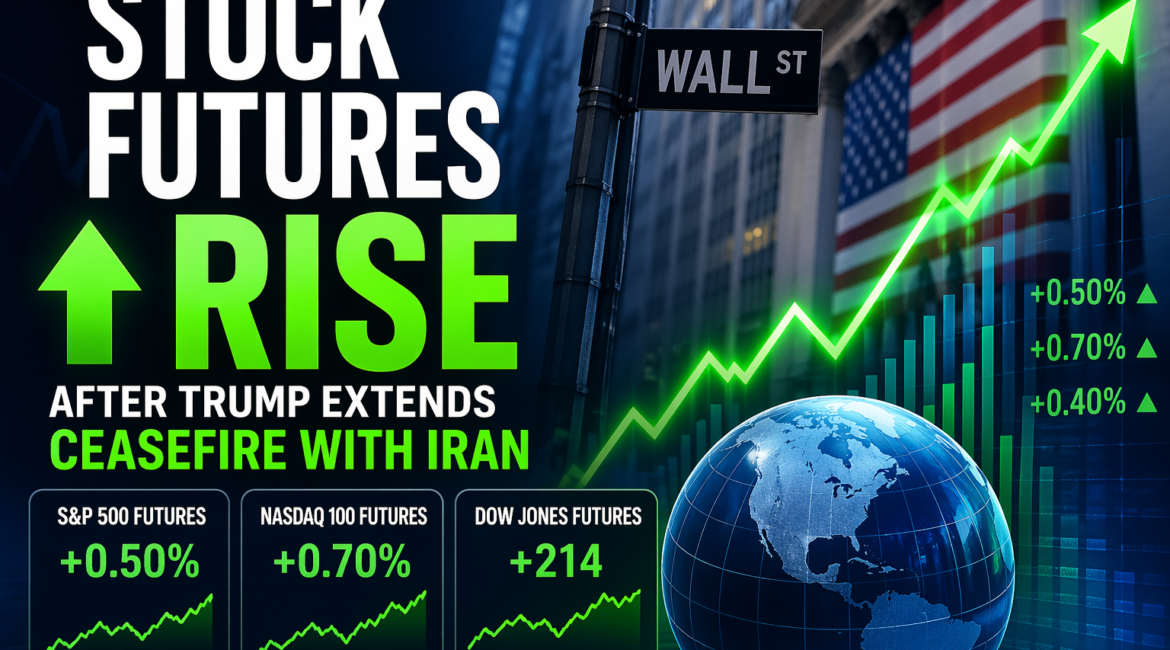
Stock futures climbed across major indexes after the announcement of a two-week ceasefire extension. S&P 500 futures gained 0.5%, while Nasdaq 100 futures added 0.7%. Dow futures also rose by more than 200 points, reflecting cautious optimism.
Market participants reacted quickly to the news, as stability in global conflict zones often supports risk assets. A widely shared tweet noted that traders viewed the extension as a “temporary relief rally,” even though long-term clarity remains limited.
The ceasefire extension followed communication between U.S. leadership and Pakistani officials, who requested additional time for negotiations. At the same time, reports suggested that Iranian representatives were unwilling to engage in talks, calling the process unproductive.
Despite this hesitation, stock futures continued upward, showing how forward-looking sentiment drives price action. Markets often price expectations rather than confirmed outcomes, especially during geopolitical events.
Meanwhile, oil prices showed mild declines after earlier volatility. Lower crude prices helped ease inflation concerns, which supported equities. This relationship remains key, as energy costs directly affect global economic stability.
Global markets react as risk appetite returns
European markets also reflected a modest recovery, with most sectors trading higher during early sessions. Basic resources stocks led gains, while travel-related shares faced pressure due to uncertainty around fuel costs.
In Asia, trading sessions delivered mixed results. Japan’s Nikkei reached a record high, supported by steady export growth. However, other regional markets struggled as investors weighed ongoing geopolitical risks.
Technology stocks remained a focal point, with semiconductor and artificial intelligence demand continuing to drive momentum. This trend has played a central role in lifting stock futures in recent months.
Energy stocks were the only sector to close higher in the previous U.S. session. Rising oil prices earlier in the week supported those gains, even as broader markets pulled back slightly.
After-hours trading also showed selective strength. Some major companies posted gains following corporate announcements, including share buyback programs and earnings updates. These moves added to the positive tone surrounding stock futures.
Although uncertainty around the Middle East situation persists, market direction suggests confidence in long-term growth themes. Investors continue to focus on productivity gains tied to artificial intelligence and innovation.
At the same time, short-term volatility remains possible. Rapid market gains over recent weeks have already priced in a level of stability that may not fully materialize.
Even so, stock futures continue to reflect a broader upward trend. The combination of easing geopolitical pressure and strong corporate drivers has kept sentiment steady.
As developments unfold, traders are likely to monitor both diplomatic signals and macroeconomic data closely. Until clearer direction emerges, stock futures may continue to move within a range shaped by both risk and opportunity.