
TLDR
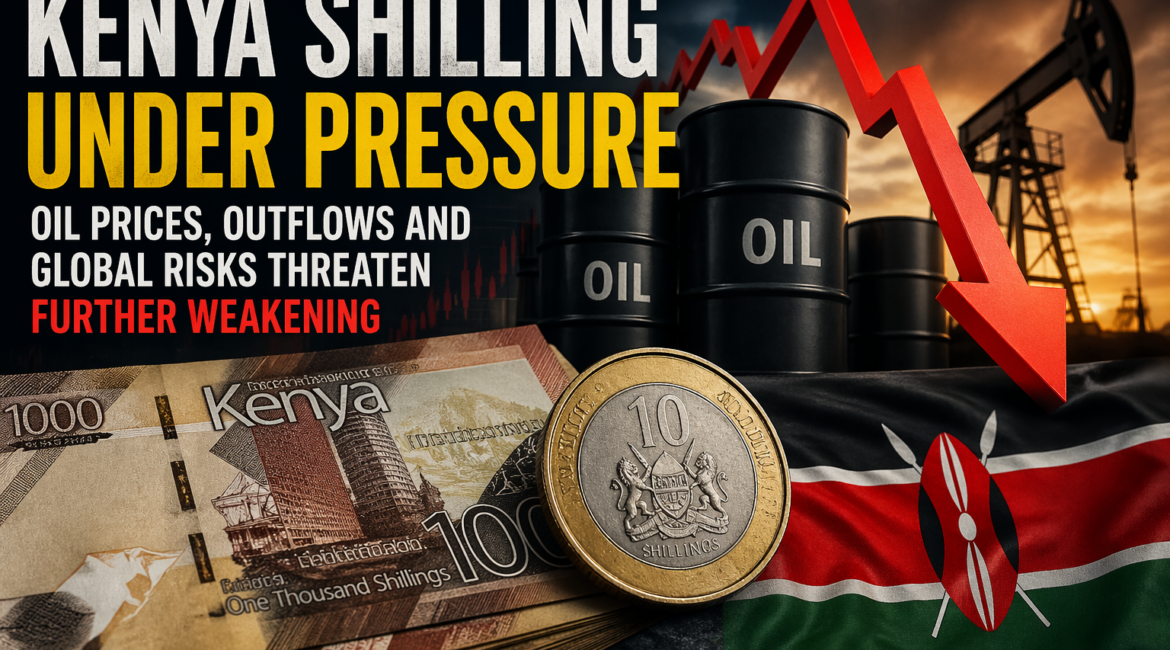
- Rising oil prices are increasing import costs, placing sustained pressure on the Kenya shilling and widening the current account deficit.
- Analysts from major banks expect the Kenya shilling to weaken further as central bank interventions may reduce over time.
- Continued foreign investor outflows from the Nairobi Securities Exchange are adding strain to the Kenya shilling stability.
- External risks, including Middle East tensions and remittance uncertainty, are limiting foreign inflows supporting the Kenya shilling.
Kenya’s shilling is facing renewed pressure as rising global oil prices and shifting capital flows weigh on the economy. Analysts at major financial institutions expect the currency to weaken in the coming months as external risks continue to build.
Kenya shilling faces pressure from oil prices and external shocks
Recent market commentary has drawn attention to growing concerns around the Kenya shilling. Bloomberg reported that strategists at leading Wall Street banks view the currency as one of the most vulnerable in Africa.
In its coverage, Bloomberg noted that analysts expect the Central Bank of Kenya to scale back dollar sales. This adjustment could allow the Kenya shilling to weaken gradually as market conditions take more control.
Elevated oil prices remain a key factor behind the outlook for the Kenya shilling. Kenya depends heavily on imported fuel, which increases demand for foreign currency when prices rise.
At the same time, export earnings are facing strain due to global tensions. Tea and flower exports, which support foreign exchange inflows, are under pressure from reduced demand.
The Central Bank of Kenya has responded by deploying part of its foreign reserves. Officials reported reserves of about $13.3 billion to help stabilize the Kenya shilling during periods of volatility.
Despite these efforts, the currency briefly moved past 130 against the dollar earlier this month. It later returned to a narrower range near 129, where it has traded for nearly two years.
Capital outflows and current account widen concerns
Financial institutions such as Citigroup, Standard Chartered, and Societe Generale have raised concerns about the Kenya shilling outlook. Their projections indicate further weakness if current trends continue.
Standard Chartered expects the Kenya shilling to move toward 132 per dollar by year-end. Citigroup suggests it could reach 135 if oil prices climb above $100 and remain high.
The widening current account deficit is adding to pressure on the Kenya shilling. The central bank now projects the deficit at 3% of gross domestic product, up from earlier estimates.
Foreign investor activity is also influencing the Kenya shilling. Data shows continued outflows from the Nairobi Securities Exchange over several quarters.
ALSO READ: Kenya Seeks World Bank Emergency Funding as Iran War Strains Economy
These outflows increased after tensions escalated in the Middle East. Investors reduced exposure to frontier markets, raising demand for dollars and weakening local currencies.
Analysts have warned that a large-scale exit by non-resident investors could add further strain. This trend may place additional downward pressure on the shilling.
Remittance flows are another area of concern. About 10% of these inflows come from Gulf countries, leaving the Kenya shilling exposed to external disruptions.
Authorities have approached the World Bank for emergency funding support. This move aims to ease pressure from rising import costs and global uncertainty.
The central bank maintains that it can manage volatility when needed. However, market participants continue to monitor whether intervention levels will decline over time.
As global conditions shift, the shilling remains sensitive to oil prices, capital movements, and policy decisions. Market expectations suggest that exchange rate adjustments may become more visible in the months ahead.