
TLDR
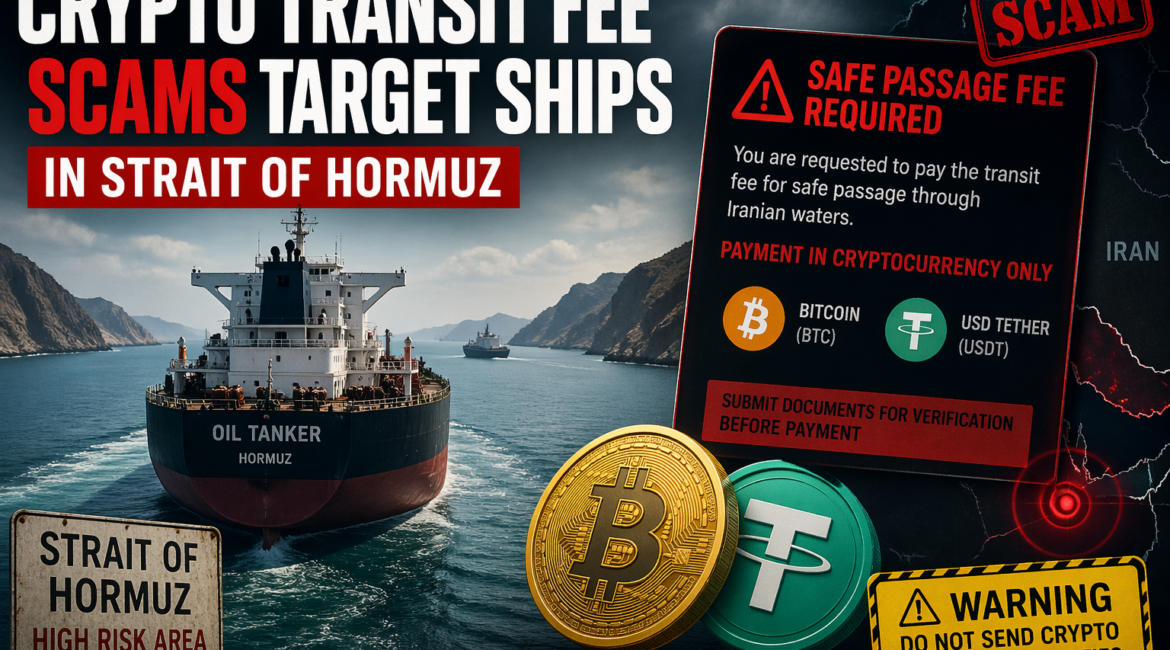
- Fraudsters are posing as Iranian authorities to demand crypto transit fee payments from stranded ships in the Strait of Hormuz.
- Shipping firms are urged to verify all messages as scammers exploit disruption and uncertainty in key global energy routes.
- Analysts warn that paying a crypto transit fee could expose companies to sanctions tied to restricted entities.
- Reports of a possible official crypto transit fee policy have added confusion, increasing risks for global shipping operators.
Shipping companies stranded near the Strait of Hormuz are facing a new risk as scammers pose as Iranian authorities and demand cryptocurrency payments for safe passage. Reports indicate that fraudulent messages are targeting vessels, raising concerns across global shipping and crypto sectors.
Scam messages target vessels with crypto demands
Shipping firms operating near the Strait of Hormuz have received fraudulent communications requesting crypto transit fee payments. These messages claim to come from Iranian security authorities and promise safe passage in return for Bitcoin or USDt payments.
A widely shared tweet circulating among maritime analysts described the scam messages as “coordinated attempts to exploit uncertainty in the region.” The post warned shipowners to avoid engaging with unknown contacts requesting crypto transit fee payments.
According to maritime risk company Marisks, these communications are not linked to official Iranian entities. Instead, they appear to be organized scams exploiting the ongoing disruption in the waterway. The firm advised shipping operators to verify all instructions through official channels.
The scam messages often request documentation before assigning a crypto transit fee. After submission, shipowners are given payment instructions and a proposed transit window. However, no verified authority supports these claims, raising serious concerns about fraud.
This situation has emerged as traffic through the Strait remains restricted. The disruption has left many vessels stranded, creating an environment where scammers can target vulnerable operators seeking quick solutions.
Sanctions risks linked to crypto transit fee payments
While some operators may consider paying a crypto transit fee to secure passage, analysts warn of legal risks. Chainalysis noted that such payments could be interpreted as financial support to sanctioned entities. This includes organizations tied to Iranian security structures.
ALSO READ:Ripple Moves XRP to Coinbase as XRP Price Holds Near $1.44 Range
Kaitlin Martin, a senior intelligence analyst at Chainalysis, explained that crypto payments tied to transit fees could trigger sanctions violations. Even indirect payments may fall under enforcement actions if linked to restricted groups.
The concern grows as earlier reports suggested Iran was considering a formal crypto transit fee system. These reports claimed vessels might pay around one dollar per barrel in Bitcoin. However, no official policy has been confirmed by Tehran.
At the same time, some vessels reportedly faced security incidents while navigating the region. One case mentioned by Marisks involved a ship targeted by gunfire. It remains unclear whether that vessel received similar scam messages demanding a crypto transit fee.
Global shipping companies are now urged to exercise caution. Verification of all communications has become critical, especially when crypto transit fee requests are involved. Industry groups continue to monitor the situation as uncertainty persists.
As the Strait of Hormuz remains a key route for energy shipments, disruptions have wide-reaching effects. The rise of crypto-related scams adds another layer of risk for operators already navigating a tense environment.