
TLDR
- Bitfinex hack Bitcoin transfer involved 8 BTC moved to Coinbase Prime under a court-ordered restitution process.
- The transfer does not signal selling, as assets must be returned directly to Bitfinex in bitcoin form.
- Bitfinex plans to redeem Recovery Right Tokens using funds from the returned bitcoin holdings.
- At least 80% of proceeds will support buyback and burn of the UNUS SED LEO token supply.
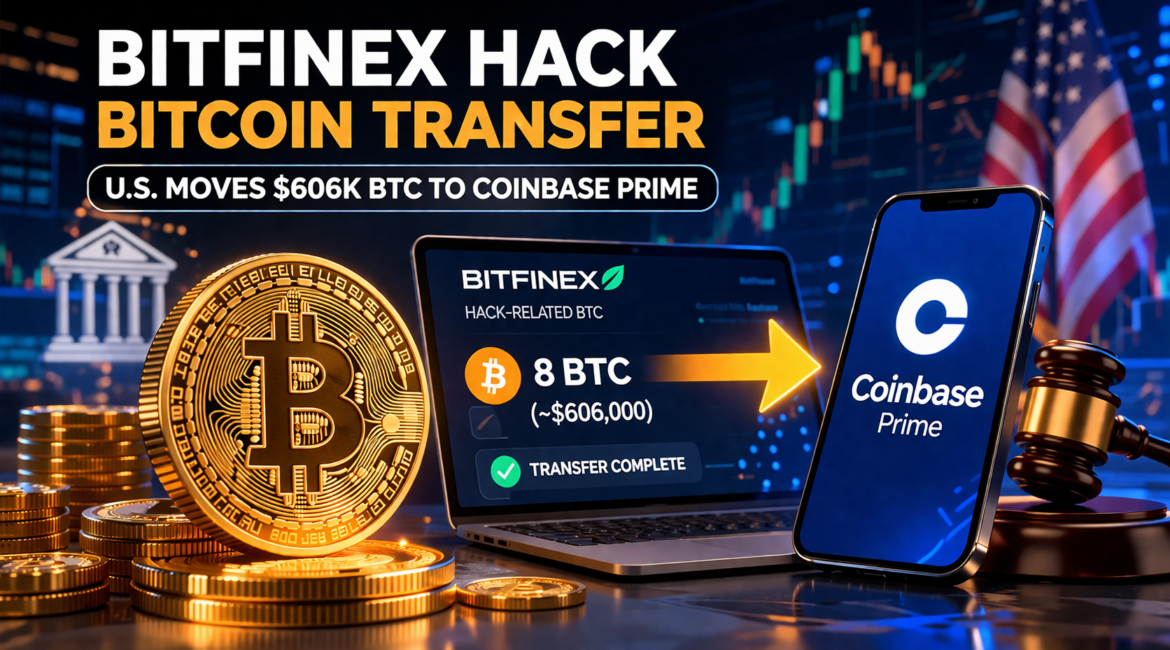
Bitfinex hack Bitcoin transfer activity has resumed as the U.S. government moved about $606,000 worth of Bitcoin to Coinbase Prime. The transfer follows a court order requiring seized assets to be returned directly to Bitfinex rather than sold.
Bitfinex Hack Bitcoin Transfer Sent to Coinbase Prime
Blockchain data confirms the latest Bitfinex hack Bitcoin transfer involved 8 BTC
$75,048.49 sent to Coinbase Prime. These funds are tied to the 2016 breach linked to Ilya Lichtenstein.
Transfers to exchanges often raise concerns about possible selling activity. However, this Bitfinex hack Bitcoin transfer follows a legal process rather than a trading decision. The movement reflects custody handling tied to asset recovery.
On-chain tracking platforms flagged the transfer shortly after it occurred. Social media posts and tweets quickly circulated details about the wallet destination and transaction value.
Some market participants viewed the Bitfinex hack Bitcoin transfer as a sign of potential selling pressure. Still, available information suggests the transaction is procedural and not market-driven.
Tweets referenced earlier court rulings that shaped this process. These updates clarified that the assets must be returned in bitcoin form instead of being liquidated.
Court Ruling Defines Bitfinex Hack Bitcoin Transfer Process
Federal proceedings in early 2025 outlined how each Bitfinex hack Bitcoin transfer should be handled. The ruling requires that seized assets be returned directly to Bitfinex.
The government is not allowed to sell these funds and transfer proceeds to the Treasury. Instead, the bitcoin must be returned in its original form to the exchange.
This structure ensures that affected users receive restitution in digital assets. As a result, the ongoing Bitfinex hack Bitcoin transfer activity remains part of a regulated process.
Bitfinex has already shared its plan for the returned funds. The exchange intends to redeem all outstanding Recovery Right Tokens linked to the breach.
These tokens were issued to users who lost funds during the hack. Their redemption marks a key step toward closing long-standing claims
Bitfinex also confirmed that at least 80 percent of remaining proceeds will be used strategically. The exchange plans to repurchase and burn its UNUS SED LEO token.
Background of the Bitfinex Hack Bitcoin Transfer
The 2016 incident remains one of the largest exchange breaches in crypto history. During the attack, 119,756 BTC were moved through thousands of unauthorized transactions.
At that time, the stolen bitcoin was worth around $72 million. Today, the same amount would carry a much higher valuation based on current prices.
After the hack, the funds were moved through mixers and darknet platforms. Chain-hopping between cryptocurrencies also helped obscure transaction trails over time.
Authorities eventually tracked and seized part of the stolen assets in 2022. The recovered bitcoin was valued at about $3.6 billion during that period.
In 2024, Ilya Lichtenstein received a 60-month prison sentence. He was later released in January 2026 under the First Step Act.
While the case progressed, the seized assets remained under government control. The U.S. has stated that such holdings may contribute to a broader strategic bitcoin reserve.
Current estimates place government-held bitcoin at about $24.54 billion. Ether holdings stand near $146 million, alongside several other digital assets.
Each Bitfinex hack Bitcoin transfer represents another step in resolving this long-running case. The process continues under clear legal direction and structured asset return mechanisms.