TLDR
- Oil prices climbed for a third session as Brent crude crossed $100 amid supply route disruptions.
- Iran seized two ships, while US naval actions tightened pressure on global oil supply flows.
- Stalled US-Iran talks continue to push oil prices higher due to ongoing uncertainty in the region.
- Strait of Hormuz restrictions reduced oil flow, driving strong upward movement in oil prices.
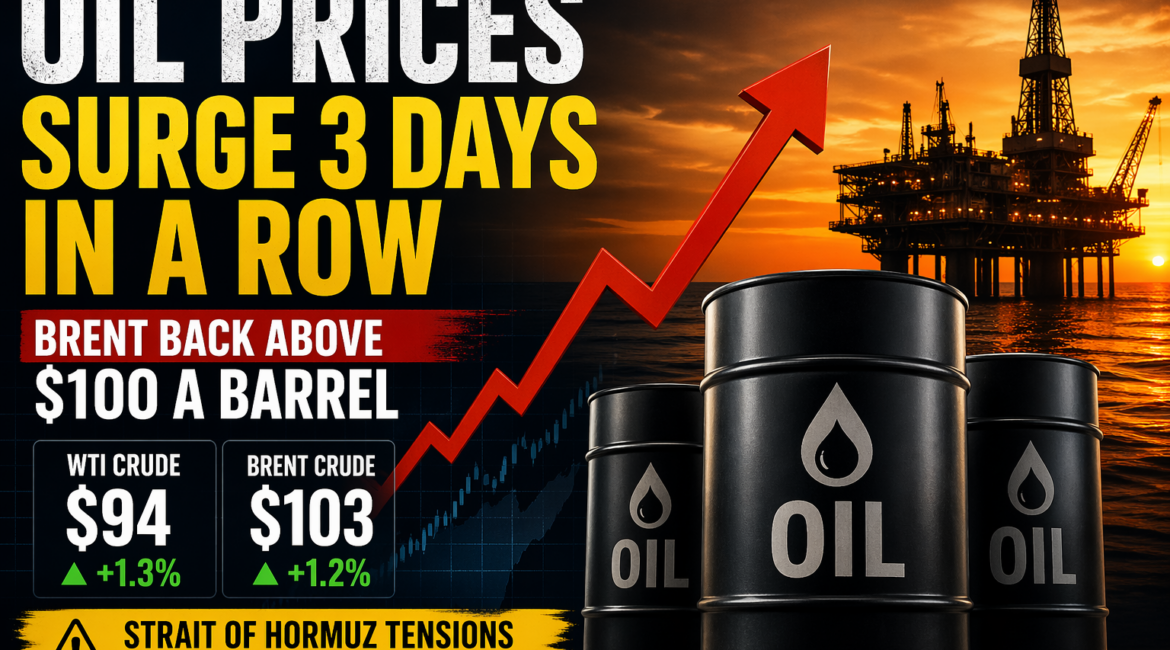
Oil prices extended gains for a third consecutive session on Thursday, as geopolitical tension in the Middle East continued to disrupt supply expectations. Brent crude moved back above $100 per barrel, while WTI crude approached the mid-$90 range.
Oil prices climb amid supply disruption concerns
Oil prices moved higher as traders reacted to escalating developments around the Strait of Hormuz. WTI crude rose 1.3% to $94 per barrel, while Brent crude gained 1.2% to reach $103. The steady rise in prices reflects growing concern over restricted supply routes and ongoing naval activity in key shipping lanes.
A widely shared tweet by Global Markets Investor noted that prices have surged for three straight sessions. The post pointed to Iran’s seizure of two container ships attempting to pass through the Strait of Hormuz. At the same time, the United States continued intercepting Iranian-flagged tankers in Asian waters, tightening pressure on global supply chains.
These events have slowed normal commercial traffic through one of the world’s busiest oil transit routes. As a result, oil prices are reacting to the reduced flow of barrels.
Market participants are adjusting positions as uncertainty around supply persists. The continued climb in oil prices suggests traders are factoring in a longer disruption period.
Shipping constraints have historically led to quick price reactions. In this case, prices are responding not only to immediate disruptions but also to the risk of further escalation.
With limited clarity on when normal transit will resume, prices remain sensitive to each new development in the region.
Stalled negotiations add pressure to oil prices
Diplomatic efforts between the United States and Iran remain unresolved, adding another layer of uncertainty. President Donald Trump extended a ceasefire at the last moment, though no clear timeline was provided. Iran has maintained its stance that negotiations depend on lifting the naval blockade.
This lack of progress continues to influence prices. Without a clear path to de-escalation, traders are watching both political signals and military actions closely.
Oil prices tend to reflect such uncertainty quickly, especially when supply routes face restrictions.
RELATED: $430M Oil Short Sparks Insider Trading Fears Ahead of Trump Iran Ceasefire Announcement
The Strait of Hormuz plays a central role in global energy flows. Any disruption in this corridor tends to affect oil prices due to its importance in transporting crude.
With the route effectively constrained, oil prices are adjusting to reflect limited availability in the market.
At the same time, the absence of a defined resolution timeline keeps market sentiment cautious. Prices are being shaped by both immediate supply issues and expectations of prolonged tension. This combination is maintaining upward pressure on crude benchmarks.
As developments continue, prices remain closely tied to geopolitical updates. Traders are monitoring signals from both sides, while supply disruptions remain the dominant factor. For now, oil prices reflect a market adjusting to ongoing uncertainty rather than a resolved situation.