
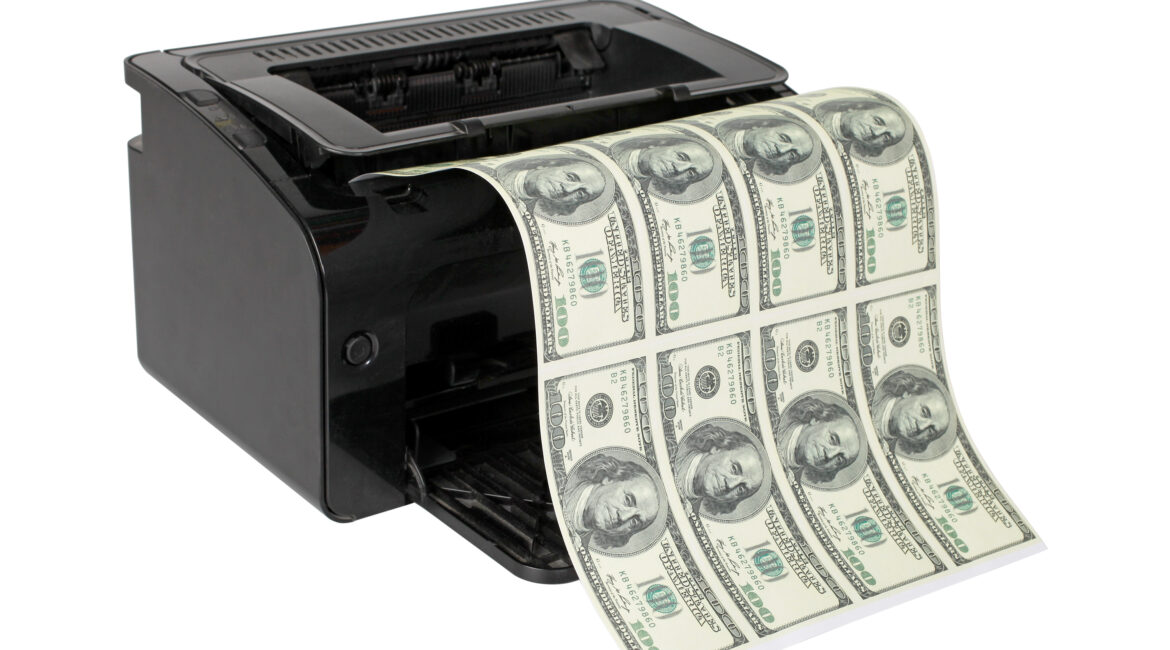
In the face of economic crises or government budget deficits, a seemingly straightforward solution often emerges in public discourse: why not print more money?
While at first glance, this approach appears to solve funding shortfalls without resorting to tax increases or spending cuts, the reality is far more complex. Experts warn that such measures could lead to catastrophic inflation, undermining the economy and the value of currency.
The Core Challenge
The fundamental issue with increasing the money supply indiscriminately, as explained by Alan Cole, a senior economic policy analyst at The Conference Board, is inflation. Inflation acts as a natural check on the ability of governments to print money at will. When more money is printed, it does not correspondingly increase the amount of goods and services in the economy. This discrepancy leads to more dollars chasing the same quantity of goods, resulting in price hikes across the board.
Sean Snaith, director of the University of Central Florida’s Institute for Economic Forecasting, points out that even modest increases in money supply can have long-term inflationary effects. The recent government stimulus measures during the 2020 pandemic serve as a case in point, with inflation rates remaining elevated years later, affecting the cost of essentials like housing, food, and transportation.
The Specter of Hyperinflation
The potential consequences of excessive money printing extend beyond standard inflation to the realm of hyperinflation, a condition where prices skyrocket by millions of percent. Hyperinflation renders a currency nearly worthless, as witnessed in historical episodes in Germany (1923), Zimbabwe (2008), and Venezuela (2018). In such scenarios, economies grind to a halt, price mechanisms fail, and bartering becomes a common practice due to the diminished value of money.
In the United States, the creation of money is carefully regulated by institutions like the Federal Reserve and the Treasury Department, both of which are tasked with maintaining price stability and preserving the value of the dollar. These agencies operate within a framework designed to prevent the unfettered issuance of currency, a policy rooted in the understanding of the adverse effects of inflation. As such, neither entity is likely to engage in significant money printing to resolve fiscal challenges, including debt ceiling standoffs, due to the potential inflationary repercussions.
Economic Policy and Fiscal Responsibility
The concept of simply printing more money to solve financial issues overlooks the delicate balance required to maintain economic stability. While it may offer a temporary solution to funding shortfalls, the long-term consequences of such actions — inflation and potentially hyperinflation — pose significant risks to the economy’s health and the currency’s value. Policymakers must therefore navigate these challenges with caution, employing a mix of fiscal responsibility and monetary policy tools to ensure sustainable economic growth and stability.
While the idea of printing more money may seem like an easy fix to economic problems, the reality is fraught with challenges and potential pitfalls. Understanding the intricate relationship between money supply, inflation, and economic health is crucial for developing effective and responsible fiscal policies.