

Key Insights:
- Bitcoin whale deposits on Binance surpassed 8,200 BTC as June selling pressure increased sharply.
- Average monthly whale inflows rose from 1,200 BTC to over 2,800 BTC recently.
- Large holders transferred Bitcoin to exchanges as market declines accelerated during June trading.
- Similar whale activity appeared during Bitcoin’s fall below $60,000 earlier this year.
Bitcoin’s June decline has brought renewed attention to whale activity on major exchanges. Large Bitcoin holders increased deposits to Binance as the market moved lower.
The token has fallen about 14% during June, and the pace of the correction increased in recent days. Binance records a sharp rise in Bitcoin transfers from large holders. Market participants often watch these movements because exchange deposits can indicate a willingness to sell assets.
Whale Transfers Rise as Bitcoin Falls
Whales are entities that move more than 100 BTC in a single transaction. At current prices, those transfers are worth more than $6 million. Darkfost data showed that whale inflows to Binance reached about 8,200 BTC on June 2. Another surge followed on June 4, when deposits exceeded 6,400 BTC.
These figures stand above the levels seen during previous weeks. The trend also appears in longer-term data. Since mid-April, average monthly whale inflows on Binance have been around 1,200 BTC. That figure has now climbed above 2,800 BTC per month.
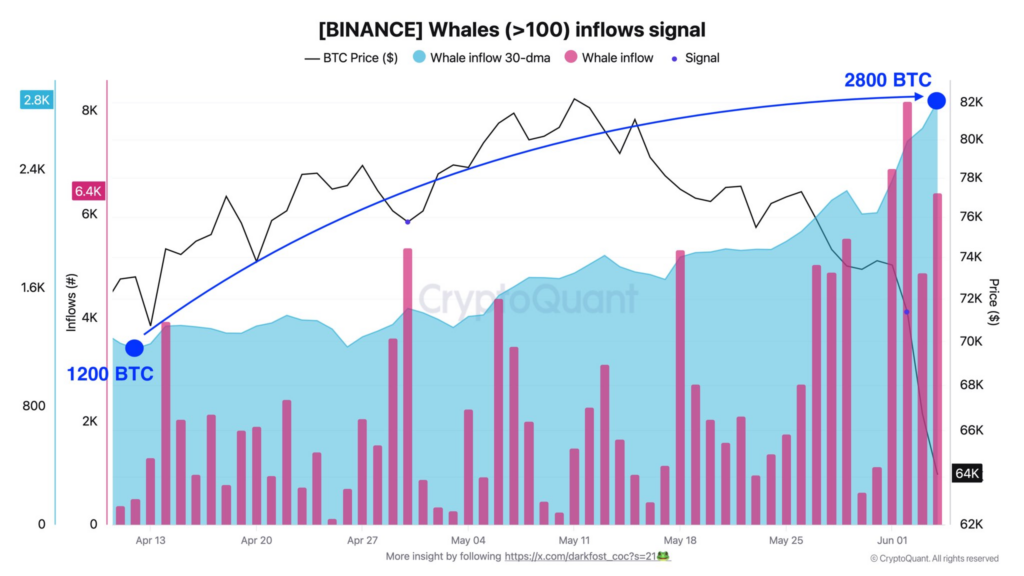
Darkfost stated, “BTC inflows from whales have accelerated sharply.” The analyst noted that some large holders may be moving Bitcoin onto exchanges to reduce market exposure during the ongoing decline.
Large exchange deposits are often monitored because they can increase available supply. When more Bitcoin reaches trading platforms, selling activity can become easier to execute.
Selling Pressure Returns to Levels Seen Earlier This Year
The recent spike in whale deposits resembles activity seen during the asset’s decline below $60,000 in early February. During that period, exchange inflows from large holders also increased sharply. The analyst said the current behavior appears to reflect risk management during market weakness.
The analyst suggested that some investors may be reacting to recent price declines rather than following a long-term strategy. Increased whale inflows can add short-term selling pressure. Traders often watch exchange data closely because it may offer clues about market sentiment and potential supply changes.
While whale deposits have risen, market participants continue to track broader factors affecting Bitcoin prices. These include liquidity conditions, investor demand, and activity across major exchanges. As the token continues to trade under pressure, whale movements are likely to remain a key metric for investors monitoring the market.