

Key Insights:
- Bitcoin correction reduced price from $82,000 to near $73,500 recently observed.
- Short-term holders increased selling activity and moved Bitcoin to exchanges at losses recorded.
- Exchange inflows showed negative one thousand three hundred BTC over a twenty four hour period.
- Data shows faster reaction from short term holders during market correction phases recently observed.
Bitcoin recorded a correction after reaching $82,000 on May 8, then the price later fell near $73,500. On-chain data shows increased selling from short-term holders during the drop. These investors have held Bitcoin for less than six months. Data shows more coins moving to exchanges at a loss. The net flow reached negative 1,300 BTC in 24 hours. This change reflects higher selling activity during recent market pressure. Trading activity increased across exchanges as volatility remained elevated during the same period.
Short-Term Holders Increase Loss-Based Selling
Short-term holders, defined as wallets holding Bitcoin under six months, increased selling during the correction. Many coins moved from private wallets to exchanges, often indicating intent to sell. Market data showed holders exiting positions at lower prices. Analyst Darkfost noted this group reacted quickly, adding that many of them chose to sell at a loss.
Some traders reacted to price swings with faster exits, adding pressure on short-term price movement. Market observers tracked increased transfer activity during intraday dips across major exchanges. Earlier flows showed more coins sent to exchanges at profit levels. This pattern changed during the current week.
Data from March showed similar behavior when Bitcoin fell below $70,000. The shift shows a rise in loss-based transactions. This marks reduced profit-taking among short-term investors and faster reactions to price movement. This behavior aligns with stronger reactions seen during volatile trading sessions in past cycles. Such patterns often reflect short-term uncertainty when price levels change quickly.
Exchange Inflows and Market Behavior Shift
Exchange inflows increased as more Bitcoin moved from wallets to trading platforms. Such movements often indicate preparation for selling. On-chain records show loss-based inflows exceeding profit-based inflows. This pattern started earlier in the week and continues. Net flow shows negative 1,300 BTC over a 24-hour period. Market participants observed stronger activity during declines.
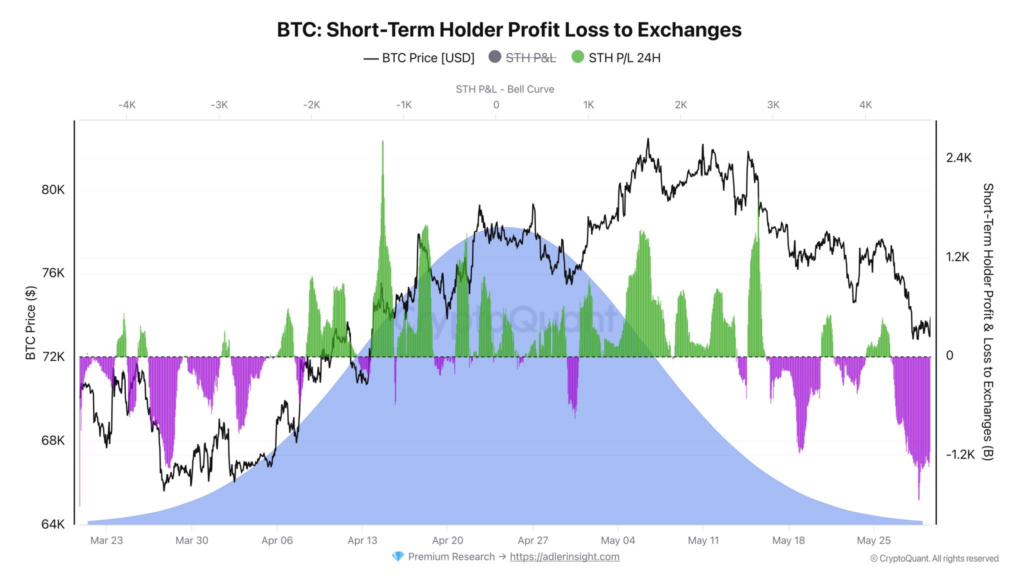
These inflows can show increased exchange usage during correction phases across spot markets. Traders often move assets to exchanges when preparing for possible selling activity. The shift in flows shows higher sensitivity among short-term holders. These investors respond faster to price changes compared to long-term holders.
Data suggests loss-driven selling has appeared in past corrections. Market observers track these movements to understand trading behavior. Bitcoin current activity reflects adjustment after the drop from $82,000. Analysts monitor wallet behavior closely to track sentiment shifts among active market participants. This data helps in studying how retail traders react to sudden price corrections.