

Key Insights:
- Michael Saylor allocates funds toward bonds instead of additional Bitcoin purchases this week.
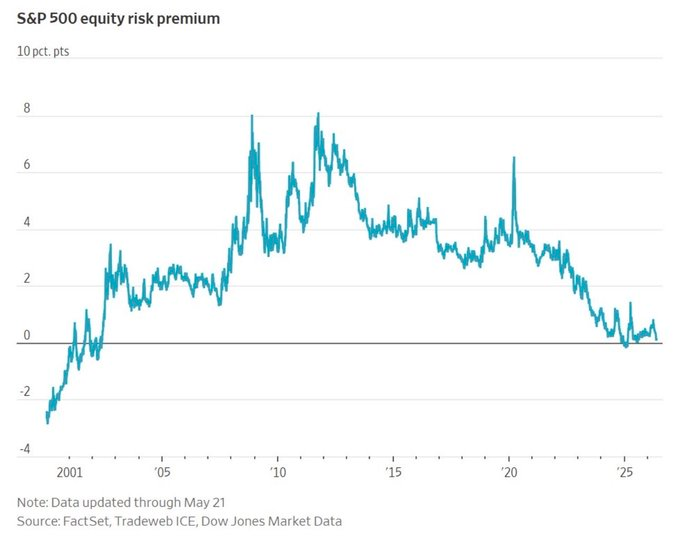
- Equity risk premium falls to lowest level since dot-com bubble era 2,000 period observed.
- Bond yields attract investors seeking stable returns during changing market conditions across global markets.
- Capital rotation discussions rise as equities trade near price discovery levels in the current cycle.
Michael Saylor has shifted a portion of corporate funds toward bonds instead of Bitcoin purchases this week. The move comes as traders monitor changes in bond yields, equity valuations, and risk appetite across major markets.
Analysts track how investor allocation shifts between fixed income assets and equities as interest rates remain elevated. The discussion comes from social media commentary referencing valuation cycles and portfolio rebalancing trends across global financial systems.
Michael Saylor Bond Allocation and Investor Confidence
Michael Saylor directed part of company funds into bonds rather than additional Bitcoin purchases. The decision is linked to treasury management practices and investor expectations around stability. Corporate strategies often adjust asset allocation when volatility changes across digital and traditional markets.
Michael Saylor continues to position Bitcoin within a broader capital structure that also includes lower risk instruments. Bonds are used by institutions as lower risk instruments that provide yield over time. They can also move in value when interest rates change in financial markets.
Analysts observe that dual features of income and price movement attract capital during uncertain equity conditions. The current environment shows stronger attention toward fixed income products across large portfolios. Interest rate policy and inflation expectations continue to shape bond demand across major economies and institutional funds.
Equity Risk Premium and Portfolio Rotation Signals
However, market data shows the equity risk premium has reached its lowest level since the dot-com period in 2,000. The metric compares expected returns from equities against bond yields. Lower spreads can change allocation choices across investors who compare risk and return. At the same time, bond yields remain elevated due to current rate conditions.
Investors also monitor yield curves and liquidity conditions when comparing equity and fixed income returns. This situation is tracked by analysts studying how capital moves between asset classes. Equity markets trade near price discovery levels, while bond instruments attract attention from yield focused investors.
Discussions include Bitcoin as part of broader allocation flows across digital assets. Portfolio adjustments may occur as investors compare returns across different instruments. Market flows may adjust when relative returns between bonds, equities, and digital assets shift. These movements are often studied in macroeconomic reports that track investor positioning across global markets.