Key insights:
- Markets reacted quickly to unverified military claims in the Strait of Hormuz.
- Nasdaq and oil moved sharply within minutes of each headline shift.
- CENTCOM denied reports of a US warship strike.
- Prices reversed rapidly before the US market open.
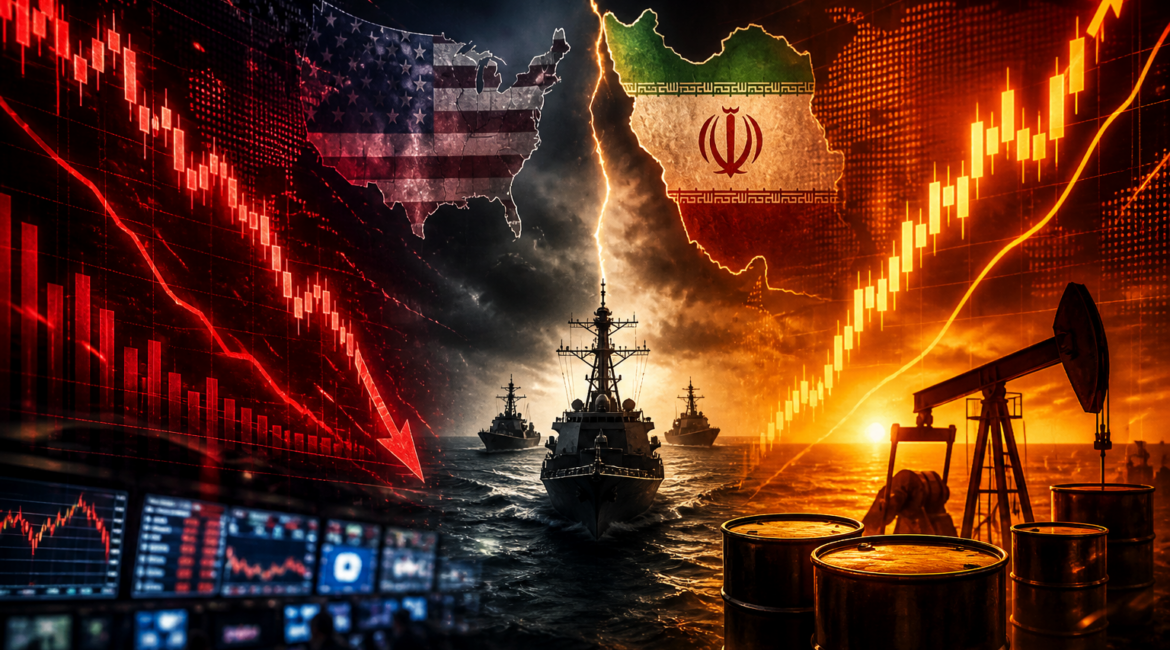
Financial markets showed strong volatility after reports of a maritime incident near the Strait of Hormuz emerged. Iran state media reported that the IRGC launched missiles targeting a US warship in the Strait of Hormuz.
Iran US Naval Strike Reports Trigger Sharp Market Swings
Sharp market movements were reported in global trading after claims of a naval attack in the Strait of Hormuz. The situation unfolded in a short time window and affected both equities and energy markets. Iranian state media reported that the Islamic Revolutionary Guard Corps had struck a US warship using two missiles.
Analyst Bull Theory stated that markets reacted immediately after the news appeared online. The Nasdaq index dropped by 0.93%, at the same time oil prices rose by 4.5%. Traders adjusted positions as uncertainty increased in early signals from the region.
The Strait of Hormuz remained a focal point due to its role in global oil transport. Market participants reacted to the possibility of disruption in shipping routes. Trading volumes increased as prices moved rapidly across multiple asset classes. This added pressure to pre-market positioning and futures contracts. Short-term volatility increased across technology and energy-linked assets.
CENTCOM Denial Triggers Reversal in Nasdaq and Oil Price
The United States Central Command later issued a public denial regarding the reported strike. The statement addressed the claims that had circulated earlier in the session. CENTCOM stated, “No US Navy ships have been struck. US forces are supporting Project Freedom and enforcing the naval blockade on Iranian ports.”
The Nasdaq recovered by 0.79% within minutes. Oil prices also reversed and dropped 4.30% from their peak levels. The rapid price changes showed how quickly markets responded to conflicting reports. Traders adjusted positions again as new statements entered the information flow. Liquidity remained high during the reversal phase.
The situation continues to develop before the official US market open. Investors monitored both official military communications and regional media reports for further updates. The trading session reflected how geopolitical news flow influenced short-term market behavior. Price action remained sensitive to confirmation or denial of key events.