
Key insights:
- Final CLARITY Act rewards text allows crypto users to earn rewards based on real platform activity rules.
- US officials and crypto firms reached a compromise after months of discussions involving Treasury and lawmakers.
- Banks secured stricter reward limits while industry preserved user earning ability within crypto platforms.
- Focus now shifts to token classification defi rules and broader digital asset regulation framework progress.
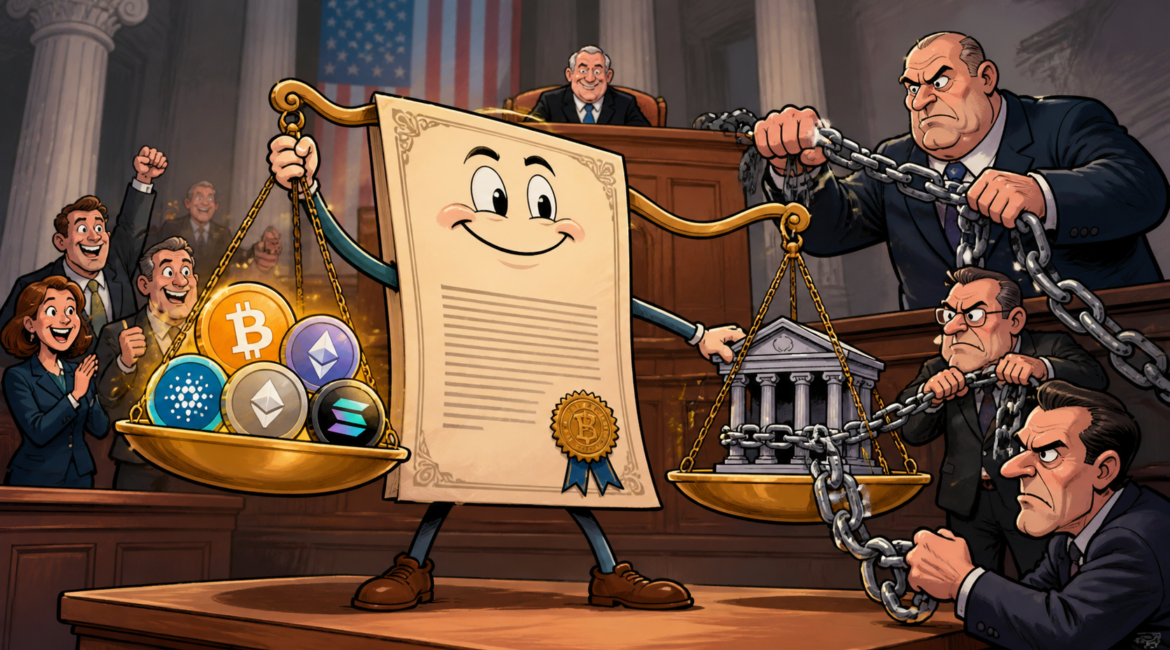
The final rewards text in the CLARITY Act has been released after months of negotiations. Industry representatives and US officials reached a compromise on crypto rewards rules. The agreement sets limits, yet it allows users to earn rewards through platform activity.
Negotiations Shape Rewards Framework in CLARITY Act
Faryar Shirzad stated that debates on crypto risks often lacked evidence and technical understanding. He said the industry took part in long discussions with policymakers and agencies. These talks included the White House and the US Department of the Treasury.
Lawmakers such as Thom Tillis and Angela Alsobrooks was part of the process. The discussions aimed to balance financial rules and crypto growth. “much of this debate was based on imagined risks,” he said in a public statement.
Banks pushed for tighter controls on rewards during the talks. However, the final text allows users to earn rewards tied to actual platform use. Shirzad said, “we protected what matters – the ability for Americans to earn rewards.” The compromise reflects both regulatory concerns and industry input.
The statement also noted that crypto firms remained active in policy discussions. This engagement shaped the final language of the bill. The result creates a structured approach while still supporting user participation in crypto networks.
Focus Shifts to Broader Crypto Regulation Framework
After resolving the rewards issue, attention now moves to the wider CLARITY Act. Shirzad said progress has already been made in other sections of the bill. These areas include token classification, decentralized finance, and tokenization rules.
He noted that policymakers and industry groups worked on these sections during the same period. Adding that “it’s time to focus on the broader bill.” The final version of the bill will include these updates once released.
The broader legislation aims to define how digital assets are regulated in the United States. It also seeks to position the country within the global financial system. Shirzad said the framework supports innovation and national security goals.
The industry now awaits the complete text for review. Lawmakers are expected to move the bill forward after this stage. Shirzad said, “it’s time to get CLARITY act done,” signaling readiness for the next phase.