
TLDR
- Apple Google nudify apps continue to appear in stores despite rules banning explicit and nonconsensual content.
- Reports show these apps gained millions of downloads and generated large revenue across both platforms globally.
- Search tools and ads sometimes direct users toward nudify apps, increasing their visibility and reach.
- Enforcement actions removed some apps, yet similar tools keep reappearing due to review system gaps.
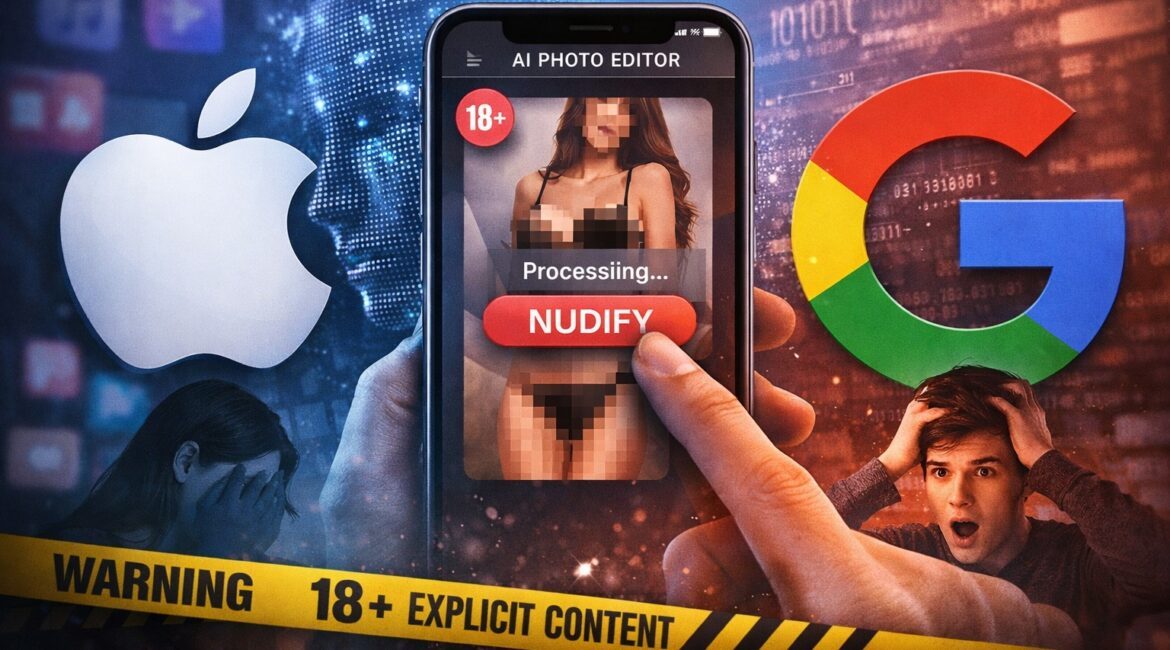
Apple and Google continue to host mobile apps that generate nonconsensual sexualized images, despite clear policy restrictions. A recent report has drawn attention to gaps in enforcement, raising fresh concerns about content moderation across major app marketplaces.
Report Flags Ongoing Presence of Nudifying Apps
A report shared by Bloomberg News through its official tweet revealed that both companies still host such applications. The Tech Transparency Project identified multiple apps capable of altering images to simulate nudity or partial undress.
Search terms like “nudify” and “undress” reportedly return several apps across both stores. These tools allow users to edit images of celebrities and private individuals without consent. The report noted that some apps are also promoted through search ads and autocomplete suggestions.
Researchers found 18 such apps on Apple’s App Store and 20 on Google Play. Combined, these apps have reached 483 million downloads and generated around $122 million in revenue. These figures were based on estimates from market research firm AppMagic.
Katie Paul, director of the Tech Transparency Project, stated in the tweet that platforms are not only failing to remove these apps. She added that search systems sometimes guide users directly toward them.
Both companies maintain policies that prohibit explicit or degrading content. Apple bans overtly sexual material, while Google restricts apps that claim to undress individuals or simulate such actions.
Enforcement Actions and Policy Gaps Remain Visible
Following inquiries, Apple removed 15 apps identified in the report. The company also contacted developers of six additional apps over potential violations. Some applications, however, were deemed compliant under existing guidelines.
Google said it has suspended several apps mentioned in the report. The company added that investigations are ongoing and actions are taken when violations are confirmed.
Despite these removals, researchers observed that similar apps reappear within months. This pattern points to ongoing challenges in monitoring and reviewing app submissions effectively.
Some apps present themselves as standard image editors or AI tools. However, they still allow misuse through certain features. This makes detection more difficult during the review process.
An example cited in the report involved a face-swapping app. It promoted harmless features but included templates with suggestive content. The app had over one million downloads and was rated suitable for general audiences.
The developer of that app stated it does not allow explicit content generation. It also said some questionable material may have been uploaded by users and has since been removed.
Regulatory pressure is increasing in response to these concerns. In the United States, a law was signed to criminalize the sharing of nonconsensual sexual content. Meanwhile, the United Kingdom is preparing legislation that could hold tech executives accountable.
Researchers also pointed to how app store algorithms influence visibility. Apps with higher engagement often appear more prominently, even when they raise concerns.
The report shows that enforcement remains inconsistent. While some apps are removed, others continue to surface through search features and recommendations.