
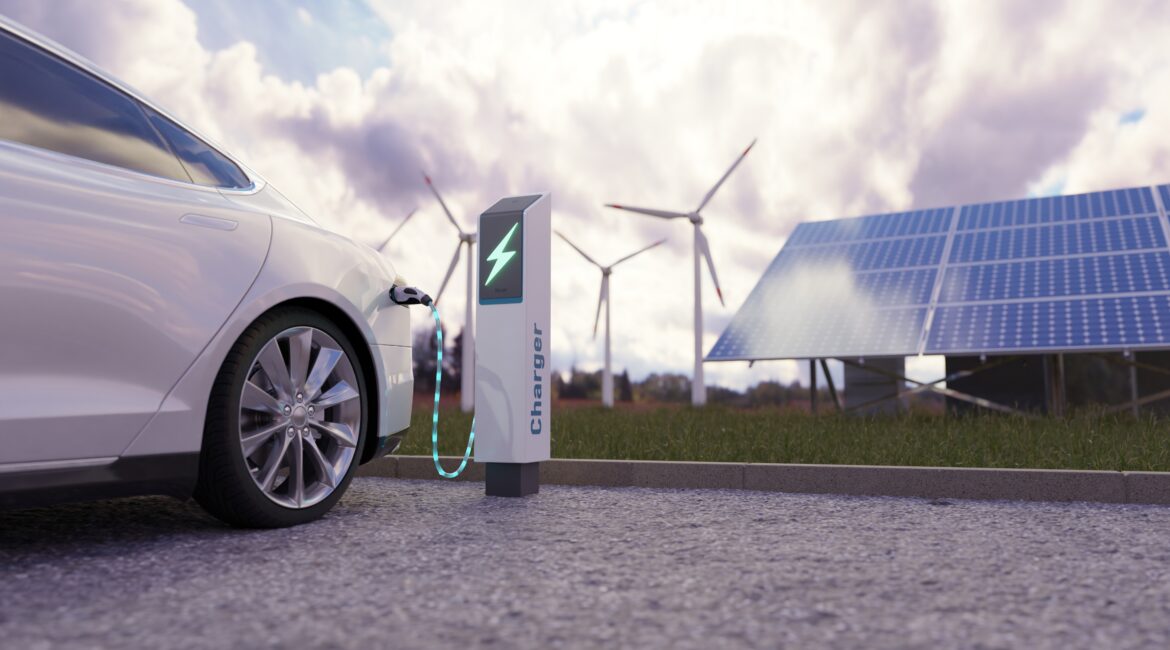
Saudi Arabia is leading the charge in the Middle East with significant investments in the electric vehicle (EV) sector. This initiative is part of the Kingdom’s broader strategy to diversify its economy and reduce carbon emissions, in line with Vision 2030.
With local and international investments flowing into this burgeoning industry, the prospects for EVs in daily Saudi life look promising. The launch of Ceer, Saudi Arabia’s first automotive brand dedicated to EVs, in 2022 marked a significant step towards the Kingdom’s commitment to an eco-friendly future. This move is expected to not only boost the local economy by creating jobs but also to innovate the entire automotive ecosystem in the region. Following this, major automotive players such as Lucid and Aston Martin have shown increased interest in establishing production facilities within the Kingdom.
According to industry analysts, electric vehicles may represent half of global car sales by 2035. This transition is supported by advancements in technology and increasing environmental awareness, factors that are expected to drive the EV market’s exponential growth in the coming years.
Saudi Arabia leads EV surge, driving sustainable mobility revolution in Mideast
RIYADH: As Saudi Arabia spearheads the transition toward sustainable solutions, electric vehicles…
— Alacrity Carefree (@AlacrityC39005) April 14, 2024
Challenges and Opportunities
Despite the optimistic outlook, the expansion of the EV market faces several hurdles, primarily revolving around the establishment of a reliable charging infrastructure. Mohammad Gazzaz, CEO of the Electric Vehicle Infrastructure Co., emphasizes that building a robust network of public charging stations is crucial for the adoption of electric vehicles. Currently, the “chicken or the egg” dilemma of infrastructure development versus EV presence on the roads poses a significant challenge.
Saudi Arabia’s goal to convert 30% of all vehicles in Riyadh to electric by 2030 is ambitious. This target aligns with the national objective to cut emissions by 50% in the capital and achieve carbon neutrality by 2060. However, the high capital costs and the limited number of EVs currently in use are substantial barriers to infrastructure development.
Market Growth and Technological Innovations
The EV sector’s growth is bolstered by several factors, including governmental support, technological advancements, and urbanization trends. Innovations such as battery-as-a-service and battery swapping are making EVs more accessible and convenient for users. Alexander Lemzakov, CEO of Wize, an eco-friendly mobility startup based in the UAE, points out that these technological developments along with government incentives are driving the rapid expansion of the EV market in Saudi Arabia and beyond.
Read Also: Binance Executive Nadeem Arjarwalla Located in Kenya, Extradition Efforts Underway
Predictions by Mordor Intelligence indicate that the Middle East and Africa automotive EV market will grow significantly, from $3.33 billion in 2024 to $9.42 billion by 2029. This growth is supported by the expansion of the 5G network and the implementation of national vision documents in Saudi Arabia and other Gulf countries.
The Road Ahead
The integration of electric vehicles into the daily lives of Saudi residents seems increasingly feasible. Investments in charging infrastructure, coupled with the rising popularity of EVs due to their environmental and economic benefits, are likely to accelerate this integration. The last-mile delivery sector, in particular, is poised for transformation, with companies increasingly adopting electric motorcycles and vehicles.
As Saudi Arabia continues to make strides toward its ambitious Vision 2030 goals, the electric vehicle industry remains a critical component of its strategy. This commitment to sustainable transportation solutions not only aids in environmental conservation but also positions the Kingdom as a leader in the global shift towards greener technologies.